The second gift: why most new donors never give again
About this video
A two-and-a-half-minute explainer: why most first-time donors never give a second time, what the 90 days after a first gift should look like – and how two self-updating audiences in Salesforce run that journey for every new donor.
What you'll learn
- Why the 90 days after a first gift decide whether a donor stays
- What to send in the first 30 days – and what not to
- How to time one small, specific second ask
- How two self-updating audiences run the journey for every new donor
Read the transcript
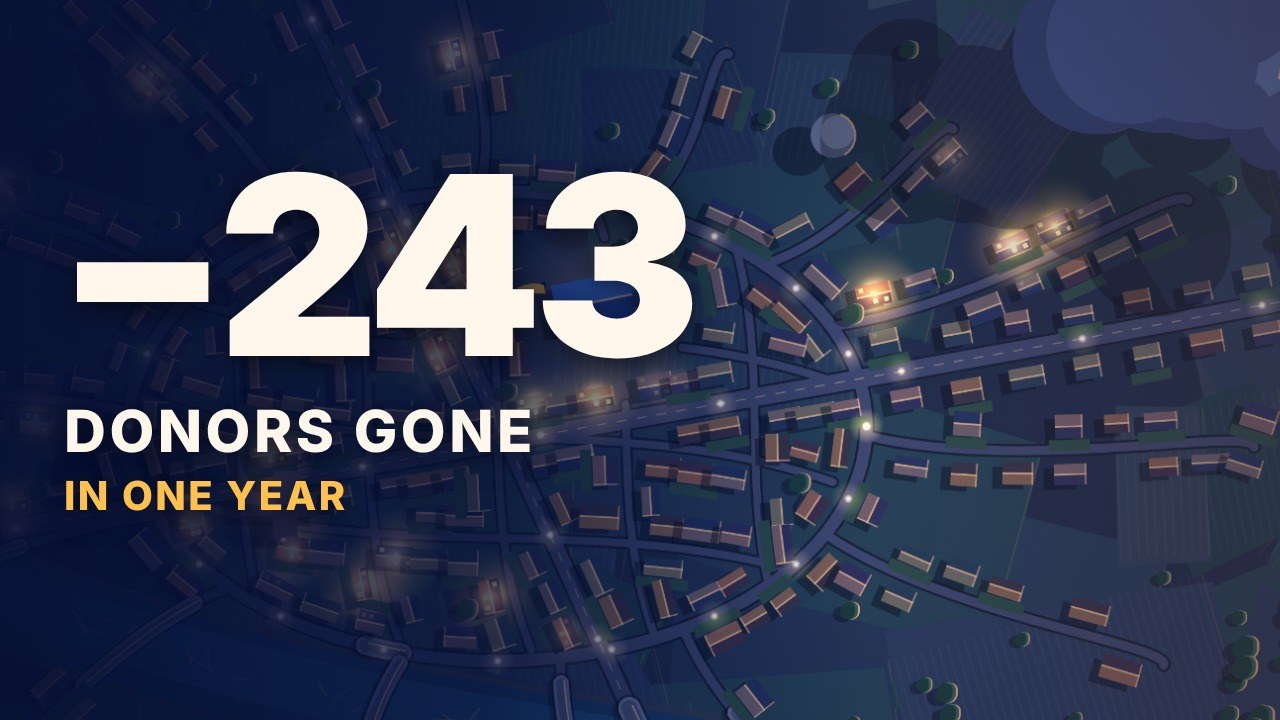
You just lost 243 donors. And by the time you notice, it’s too late. Let’s rewind – to see why it happens and how to change it.
It’s July. Your summer appeal just brought in 300 new donors. One of them is Lena. She gave €25 – for the very first time. She gets a receipt. And then … nothing.
In October, the autumn appeal arrives: the exact same letter that goes to people who’ve been giving for ten years. Most first-time donors never give a second time. Lena won’t either.
Unless someone notices her – within ninety days. Because once donors give a second time, more than six in ten stay loyal.
For the first thirty days, you only say thank you. A real one, that shows her what her gift made possible. No ask. Then, between day 31 and 90: one small, specific ask, tied to the reason she gave in the first place.
Doing this for one donor is easy. But you have three hundred. And every morning, someone else moves into the next window.
So you build it once. Two audiences that update themselves every morning at six. New donors join the day they give. On day thirty-one, they move on. And if they give again, they’re out. Nobody has to lift a finger – it all updates itself.
Day fifty-two. Lena gives again. Eight more trees. Her grove is complete. This time, far more lights stay on.